- New Growth Hacks Revealed Every Week!
- Posts
- The Rise of Redbull 📈
The Rise of Redbull 📈
Rise and grind, growth hackers 😤
Welcome back to the newsletter that’s always here to make the little, but necessary distinctions for you. Like…
it’s very important to steal… (respectfully)
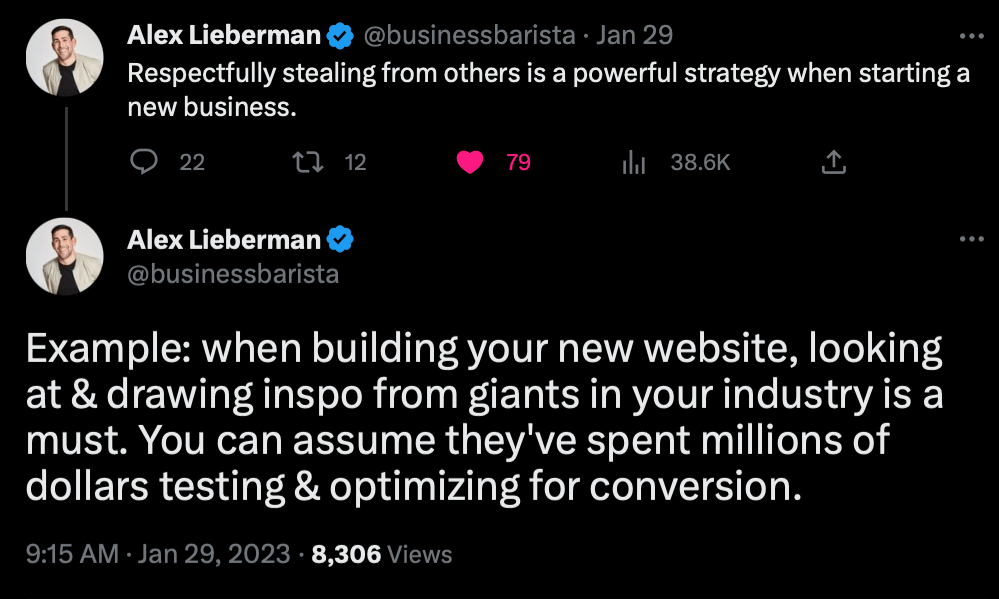
h/t @businessbarista
Or, that a CEO never has an expense, they only have investments.
Creative reframing is essential.
This week, we’ve got:
→ A Look at the Yandex Leak 👀
→ 5 Stats That Show Personalization Matters 📊
→ Growth Hacker Hall of Fame: The Rise of Redbull 📈
→ SWOT Bot 🤖
→ Pic of the Week: ChatGPT Edition ✍️
Why Should You Care About the Yandex Leak? 👀
When I’m wondering whether a topic’s worth talking about, there are two easy criteria I turn to. Either 1) everyone’s talking about it, or 2) a few very intelligent people are talking about it.
In this case, everyone’s talking about it, including some very intelligent people. Another good sign? Divided opinion. While some are saying this is not very relevant outside Russia, where Yandex wins out re: market share, others disagree.
Yandex is one of Google’s only analogs. We know that Google and Yandex both use PageRank mechanisms, and some very similar, or identical, text algorithms. There are some key differences that you should note. But still, when the Yandex code leaks and gives us the first-ever complete look into a major search algorithm, including all 1922 of its ranking factors, you’ve gotta take it seriously.
These threads (Pt. 1, Pt. 2) by @alex_buraks paint a nice picture. But here’s my quick summary:
3 Reasons Why The Leak Matters:
—> Search results on each are about 70% the same
—> SEO specialists in Russia use basically the same tactics for each
—> Yandex is full of former Google employees and was engineered to be a clone of Google
5 Confirmations That Matter From The Leak:
—> Traffic, and percent of organic traffic, are ranking factors
—> Age of links is a ranking factor, Last Update is a separate one
—> Numbers in URL & Numerous Backslashes are both bad for rankings
—> Backlinks from main pages are more important than from internal pages
—> Wikipedia matters: uplifting from Wikipedia is its own ranking factor, as is traffic that is directed from Wikipedia
These are just a few examples. Check the thread and/or the other links. Take a look for yourself.
5 Critical Personalization Data Points From Exploding Topics 📊
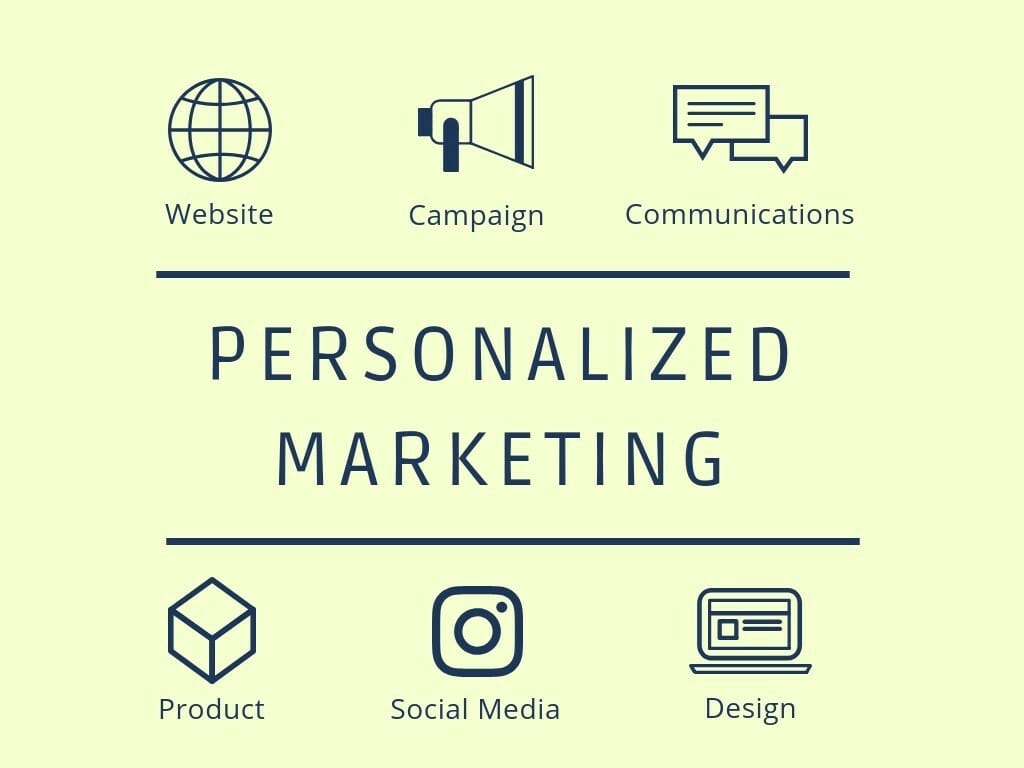
One source I’ve been paying attention to recently is Exploding Topics, whose data-driven analysis "casts a wide net" to "find trends before they’re trends." This article takes recent data to make sense of 57+ Personalization Statistics. We’ll look at 5. But first:
Why does Personalization matter?
→ empowers brands to customize their marketing to their specific customer base on an individual level
→ increases likelihood of the right potential customers encountering the right products for them → increases return on marketing budgets.
5 Stats
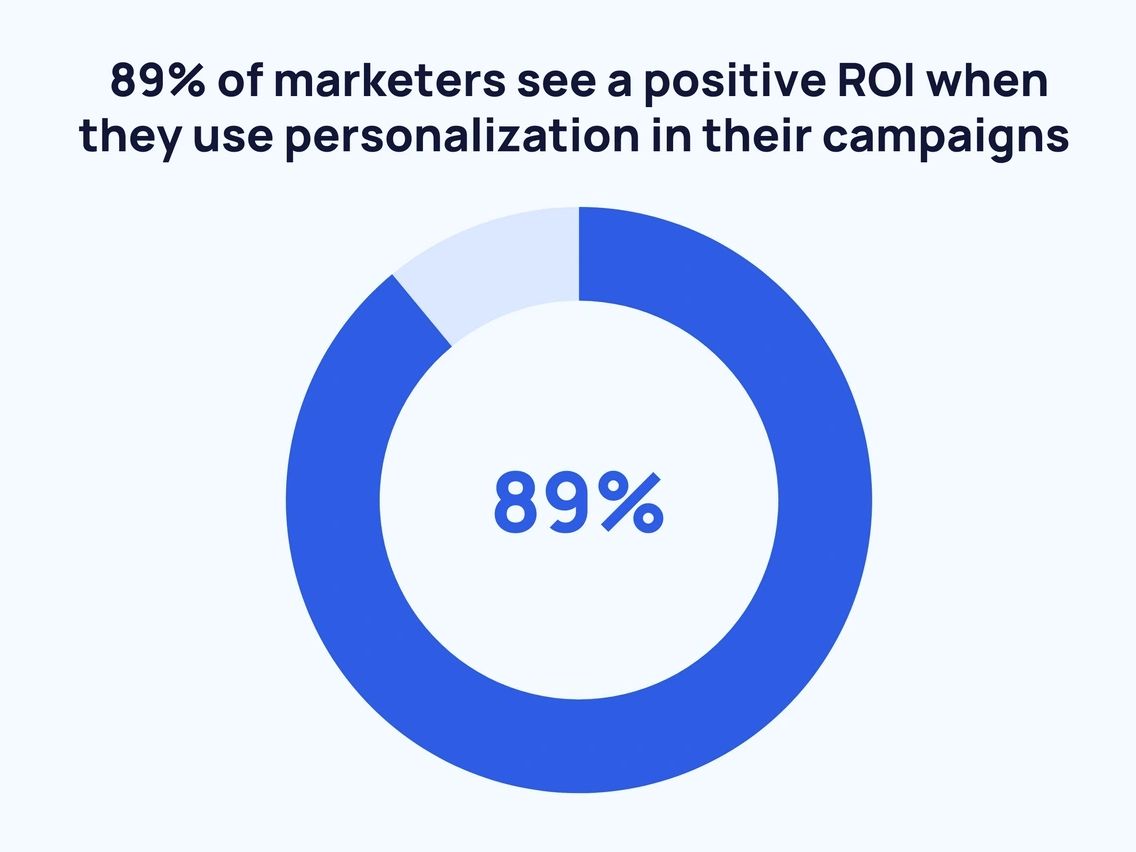
1. 89% of marketers see a positive ROI when they use personalization in their campaigns
→ therefore, only 11% experience negative ROI
2. The recommendation engine market size is projected to hit $12 billion by 2025
3. Acceptance of personalized ads improved by 19% over two years
→ from 35% to 54% from 2019-2021
4. 76% of consumers say they’re more likely to purchase from brands that personalize
→ and 78% say they’re more likely to recommend brands that personalize, as well as make repeat purchases
5. 61% of high-growth companies are shifting toward first-party data for their personalization strategies
I know 57+ sounds like a lot, but it’s a breezy read that treats an important subject thoroughly. Seriously, check it out.
SWOT Bot? 🤖
Yeah, SWOT Bot. Check out this AI that claims to “create a strategic SWOT analysis with just a click.”
(ICYMI: SWOT is Strengths, Weaknesses, Opportunities, Threats)
Enter any company from the S & P 500 and get a complete analysis in the form of a 20-page slideshow. I dug in a little and was pretty impressed by the bot’s analysis of Apple.
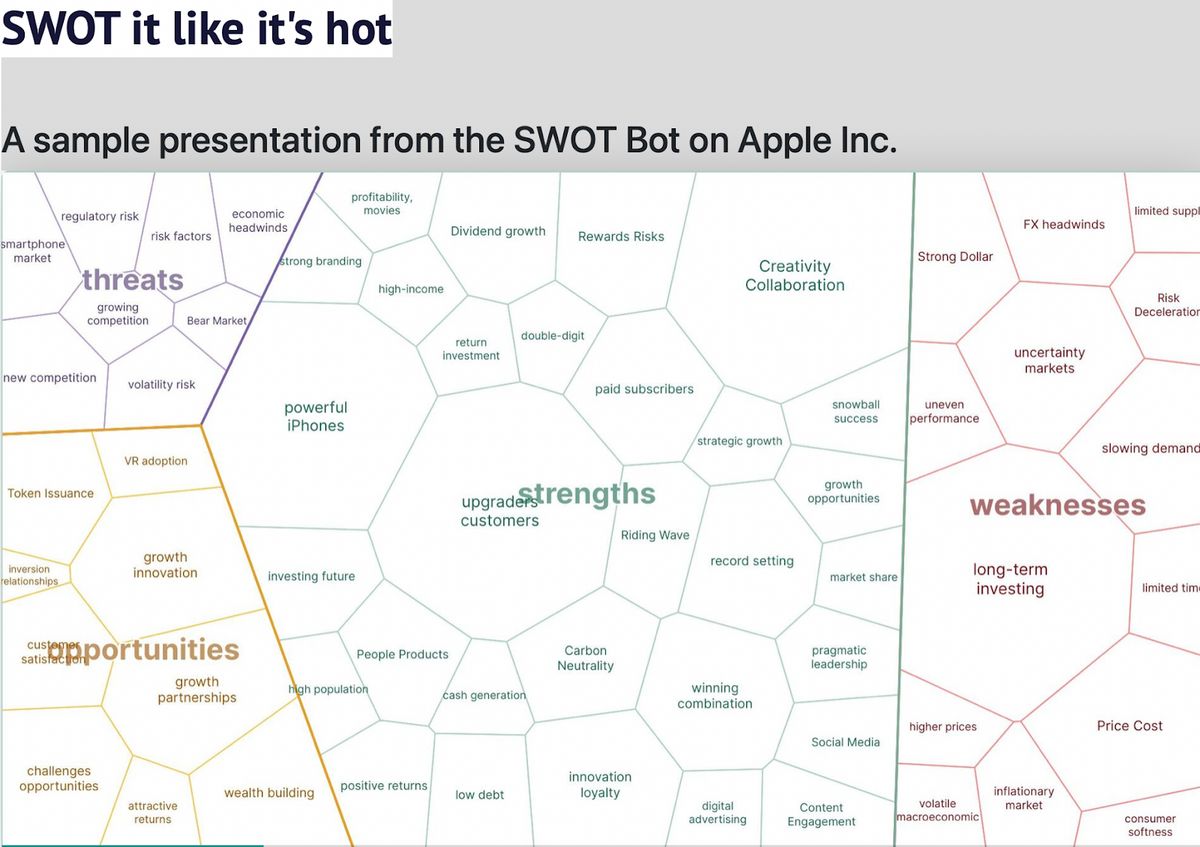
Plus, it has an edge over ChatGPT since it is programmed to guarantee whatever it reports is verified by news items, company statements, etc. They also do a Pro Version that lets you move beyond the S & P 500. Could help you get a better understanding of your niche, or what’s going on in related areas.
Growth Hack Hall of Fame: Red Bull’s Rise 📈

Red Bull has pulled some of the most memorable marketing stunts of the 21st century. Maybe you've seen the Austrian skydiver changing planes mid-flight. Or Robbie Maddison and his motorbike riding up a massive ramp and landing on the top of the Arc de Triomphe in Vegas on New Year’s Eve ’08. Oh yeah, and there's also Felix Baumgartner's skydive from outer space. There have been some legal troubles along the way, including a few… casualties… (at least they died doing what they loved? Still, I’d recommend avoiding this)...
But what matters from a marketing perspective is that Red Bull has found a way of cementing for itself an unmatched, totally unique reputation completely capturing the ethos that was always there for its founder: Red Bull Gives You Wings.
What’s Going On Psychologically?
The result? Jennifer Clinehens engages with behavioral science to explain what’s going on with Red Bull and why it’s so successful. The brand generates in the customer the kind of emotions, or feelings, they want people to associate with their product. For Red Bull, that’s excitement and adrenaline. Whether you need to jump a gorge on a skateboard, rally up a second wind to keep partying, or grind all night to hit a deadline, Red Bull is there to pump you up.
Another element of Red Bull’s success, according to Clinehen? The consistency of their brand image. Red Bull has kept the same color, the same logo, and the same catchphrase for literal decades.
So those are two goals that can guide your striving. But the explanation probably leaves you wondering: how has Red Bull consistently found ways to master this subtle art? And how did they start achieving these results in the first place?
Spoiler Alert: in case it’s not obvious, the answer has to do with a few top-notch growth hacks.
Humble Origins & Original Hacks
Before the hacks kick in, let’s go back a little further. Red Bull wasn’t always called Red Bull.
It all started with a guy named Chaleo Yoovidhya. Yoovidhya was a humble pharmaceutical worker who claims to have been blessed with “divine inspiration.” Through his work, he noticed that energy drinks were very popular around Asia despite tasting medicinal. There were ingredients common to all of the popular ones: Taurine, Caffeine, Vitamin B, and sucrose. To improve taste, he simply decided to jack up the sucrose. And voila, we have…
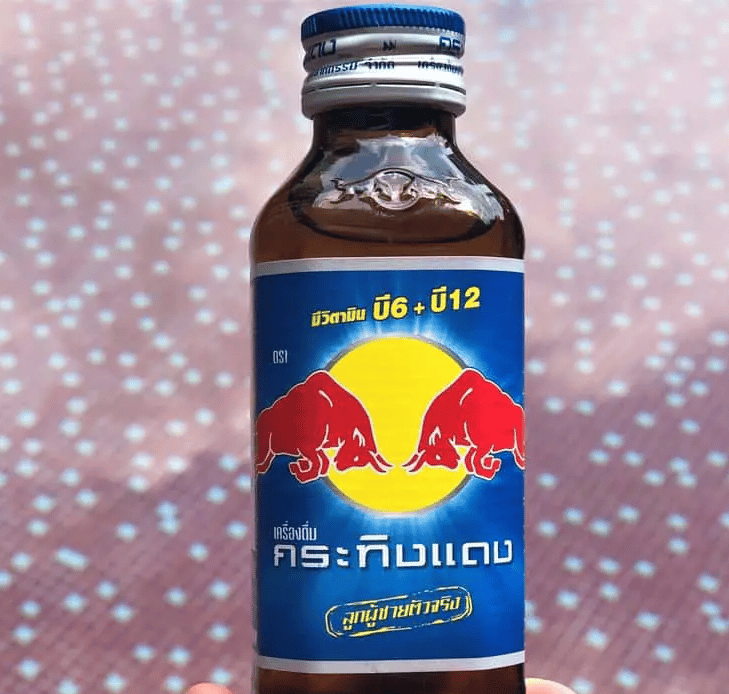
Krateng Daeng!
Wait, Krateng Daeng?
Remember: this is Thailand in 1976. Different time, different place, different language. (And, technically, different animal: Krateng Daeng translated to “Red Gaur,” Gaur being a bison-esque species of wild cattle native to Southeast Asia).

Anyway, in 1982 Dietrich Mateschitz is working as an Austrian toothpaste salesman. A business trip brings him through Thailand. Naturally, he’s jet-lagged, so he grabs a local fav: Krateng Daeng. Boom. Jet-lag disappears. It’s a miracle.
Within a few years, he’d convinced Yoovidhya that the drink could be an international hit. Mateschitz raises $500K in capital, including his life savings, and the two forge roughly a 50/50 split. Yoovidhya continues managing production out of Thailand, Mateschitz distributes globally (Europe first).
Growth Hack 1: Students & Youth as Advertisers
To this day, Red Bull is still famous for sending out young, hip, attractive brand ambassadors to concerts, festivals, campuses, etc. Now, it’s impossible to miss Red Bull’s promotional cars.
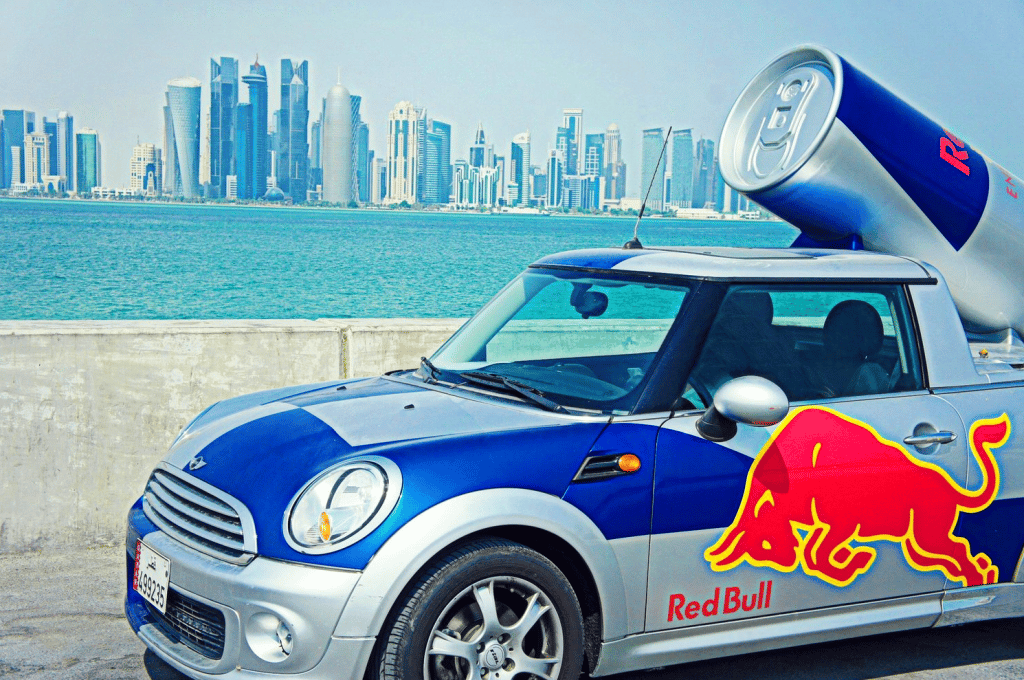
But in the early days, they’d just pay students to spray paint their vehicles and deck them out with Red Bull logos. A little less legit, but you do what you’ve gotta do.
What’s cool is that these tactics have been there from the start, and Red Bull stays true to them. Respect your OG growth hacks.
At first, Europe resisted Red Bull. Germany wouldn’t allow the product to go to market because of the amount of taurine. Austria allowed it, but consumers just weren’t having it at first. Uncommon flavor. Much more expensive than a soda. Basically, the market couldn’t make sense of Red Bull. So, Mateschitz made his own market. He started by aiming at a notoriously difficult audience: young partiers. What’s in it for them? He offered them a way to party hard and was willing to pay them to do so in the name of Red Bull. Suddenly, for this product, this new market doesn’t seem so difficult.
For the students, the deal seemed sweet. Their “job” as “brand ambassadors”? Show up to parties with a bunch of red bull and give it away for free. Or, the more difficult task: organize insanely fun parties where they’d give away red bull. An honest day’s work.
Growth Hack 2: Trash Can Hype
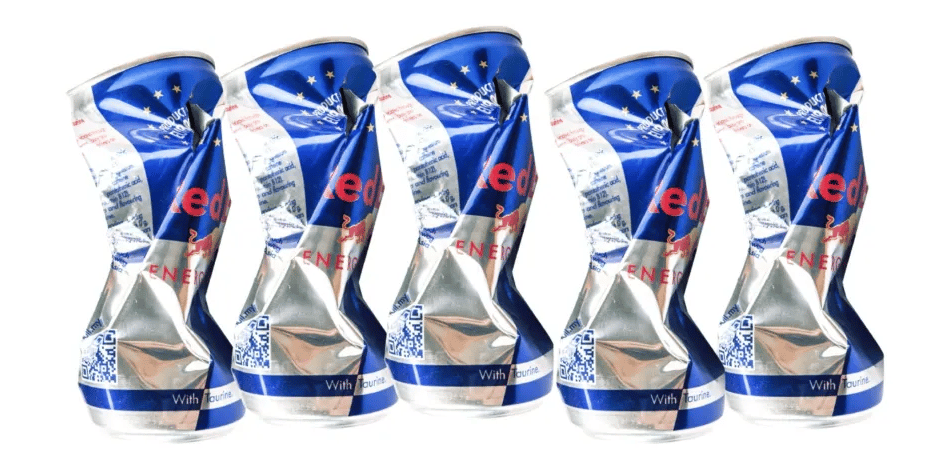
This one is next level. You can read a full case study here, but here’s the gist.
The energy drink market was pretty saturated, and traditional modes of advertising were through the roof. Plus, billboards and TV commercials weren’t optimal for the target market of youth and party-goers.
So, Red Bull would keep and collect empty cans from their various parties, and then distribute them in bins around popular clubs, event venues, college campuses, and party scenes. Their soon-to-be-iconic can shone out— literally like a diamond in the rough. Err, like a blue and silver gem in a trash can. This “social proof” created the illusion of popularity. People began associating Red Bull with partying, and the cans were being recycled in one of the most creative ways imaginable: that’s hype! This allowed them to hugely slash their marketing budget, especially compared to competitors. Cheaper and more effective.
These guerilla tactics managed to ingeniously play with customer psychology; seeing a Red Bull in the trash gives the illusion of an unpaid recommendation, which is almost always considered more trustworthy than a paid one. And that's not even entirely false: it wasn't a paid recommendation (technically).
Major Takeaways
Times have changed. There may be a lot of metaphors for trash cans around the internet, but we don’t have to name any here. That’s for you to figure out.
→ What trash can do you want your gem to shine out from? Or, to put it more blatantly: how do you want people to come to find your product? Can you find a way to stand out from conventional paid advertisements?
→ Learn what not to do from your competition, rather than (or as well as) copying what they do. Find where they’re spending, and find a way not to spend. Easier said than done? Almost definitely. But in many cases, it’s possible.
→ Stay true to your brand, but let it grow. Red Bull doesn’t need to litter its cans around Europe anymore, but it’s kept making its presence felt with ambassadors and brand vehicles. But then they’ve kept pushing that same ethos they began with and letting it grow. Red Bull has arguably come closer to giving you wings than any other product— they dropped a dude from space!
→ Strive for Legendary Status. There will always be space to be filled on the walls of the Growth Hack Hall of Fame. When we hear about Red Bull’s use of trash cans, most marketers feel a deep respect. You can get there too. Just think outside the box (in the right way). You’ll take some Ls along the way (remember, Maseschitz was denied entry into all the markets he originally strove for), but those become important resources. Accurately record your failures. Learn from them. Drop what’s not working. Keep going with whatever shows genuine potential. Get your name in HOF.
Pic of the Week ✍️
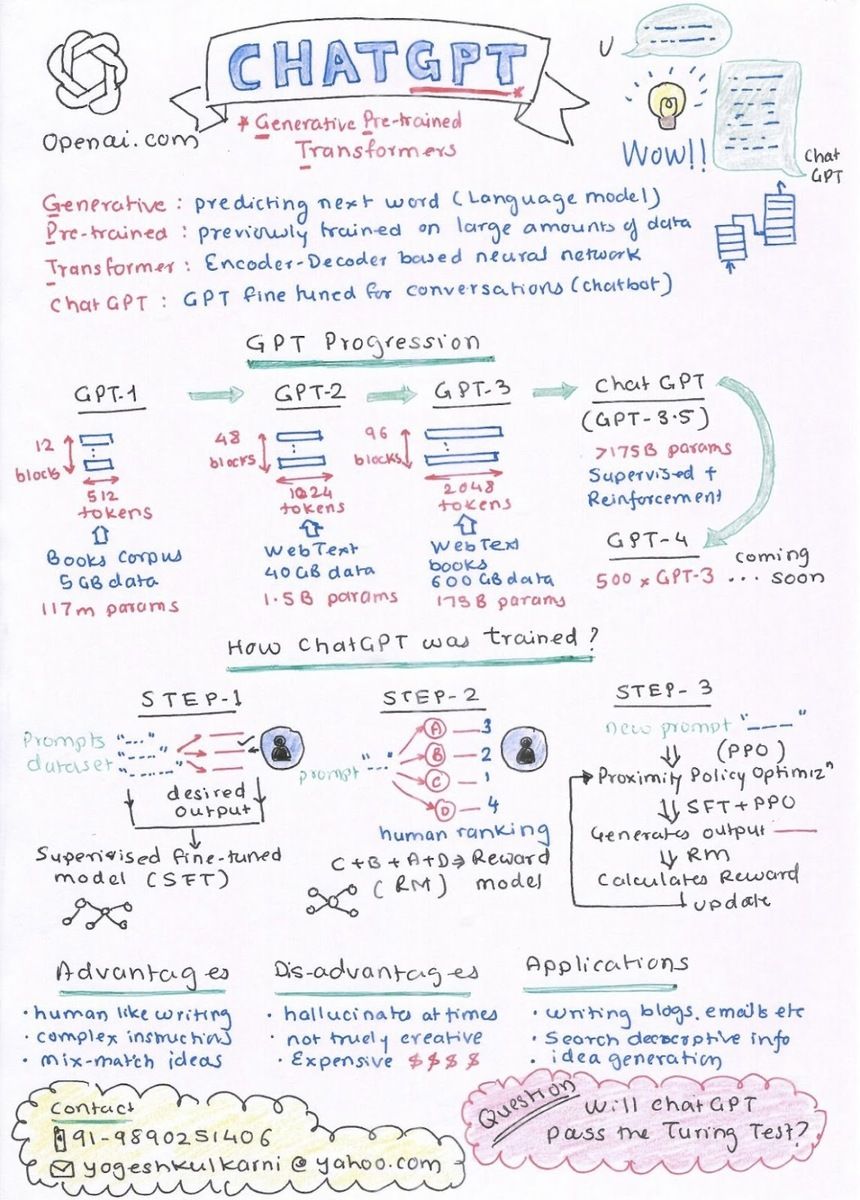
We hear a lot about ChatGPT. Here, its story is told in a unique way.