- New Growth Hacks Revealed Every Week!
- Posts
- 🤖 Around the Web: AI Edition
🤖 Around the Web: AI Edition
Rise and Grind, Growth Hackers 📈🔑
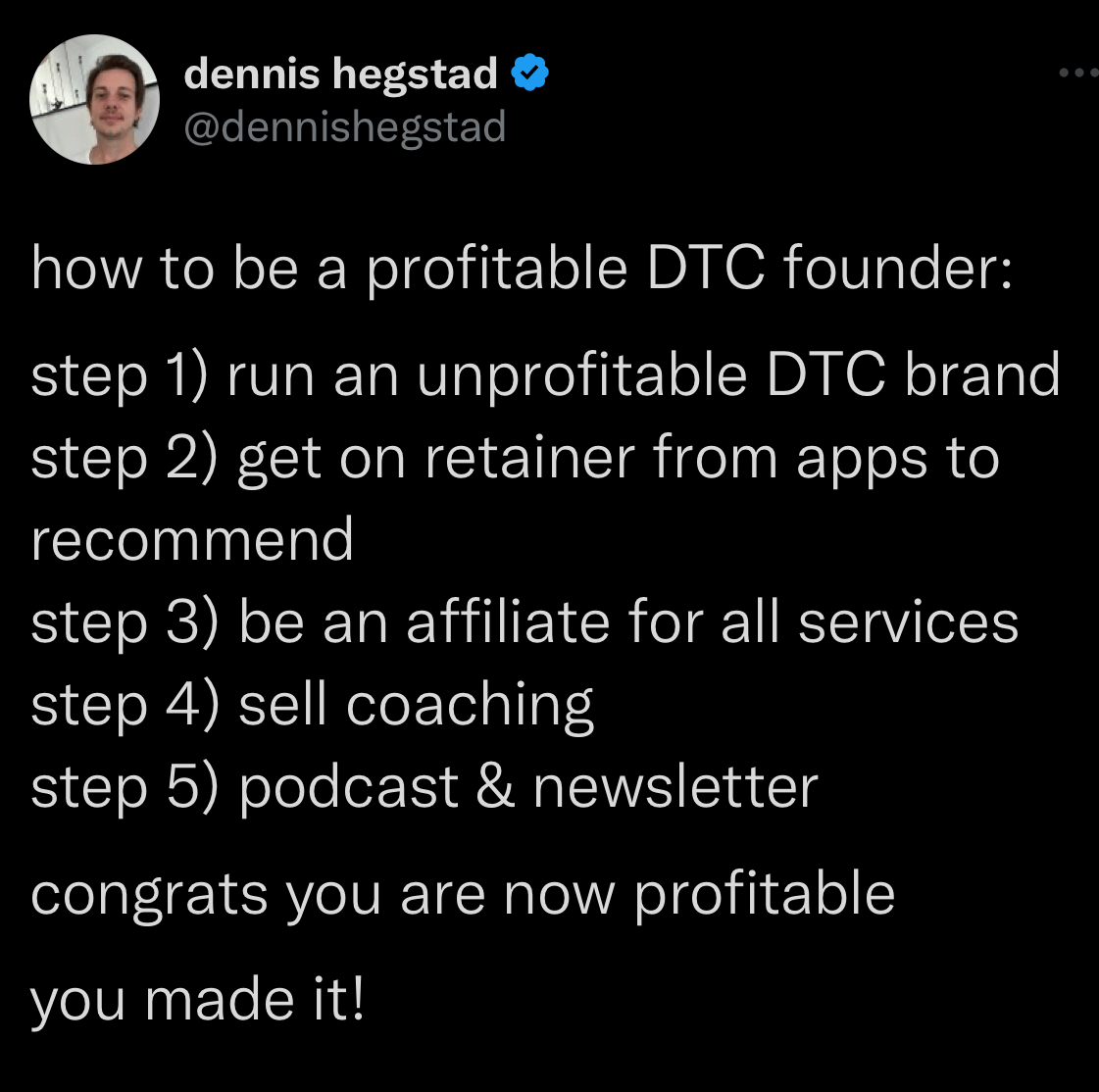
Welcome back to the newsletter that gets you growing in the right direction. So basically, a newsletter that aims to offer strategies that are not like this one😀
Instead, this week you’ll:
→ go on a brief trip around the AI discourse 🤖
→ hear the growth hacking case for YouTube Shorts 🎥
→ receive some advice on Keyword Cannibalization 😈
→ take a look at a successful new golf-based start-up use-case ⛳️
→ hear my take on 5 growth marketing channels you should all be keyed into 📊
→ be impressed by my savvy intellect, subtle sense of humor, and most importantly, my legendary humility 😎
And maybe more? No time to waste, let’s go.
Around the Web: AI Edition 🤖
Check in on your AI friends and colleagues this week. After so many weeks of headline dominance, generative AI had more Ls than Ws this week. I’m no hater, there’s clearly some unbelievable growth potential in these technologies… but you’ve gotta report the flops if you’re gonna report the glory.
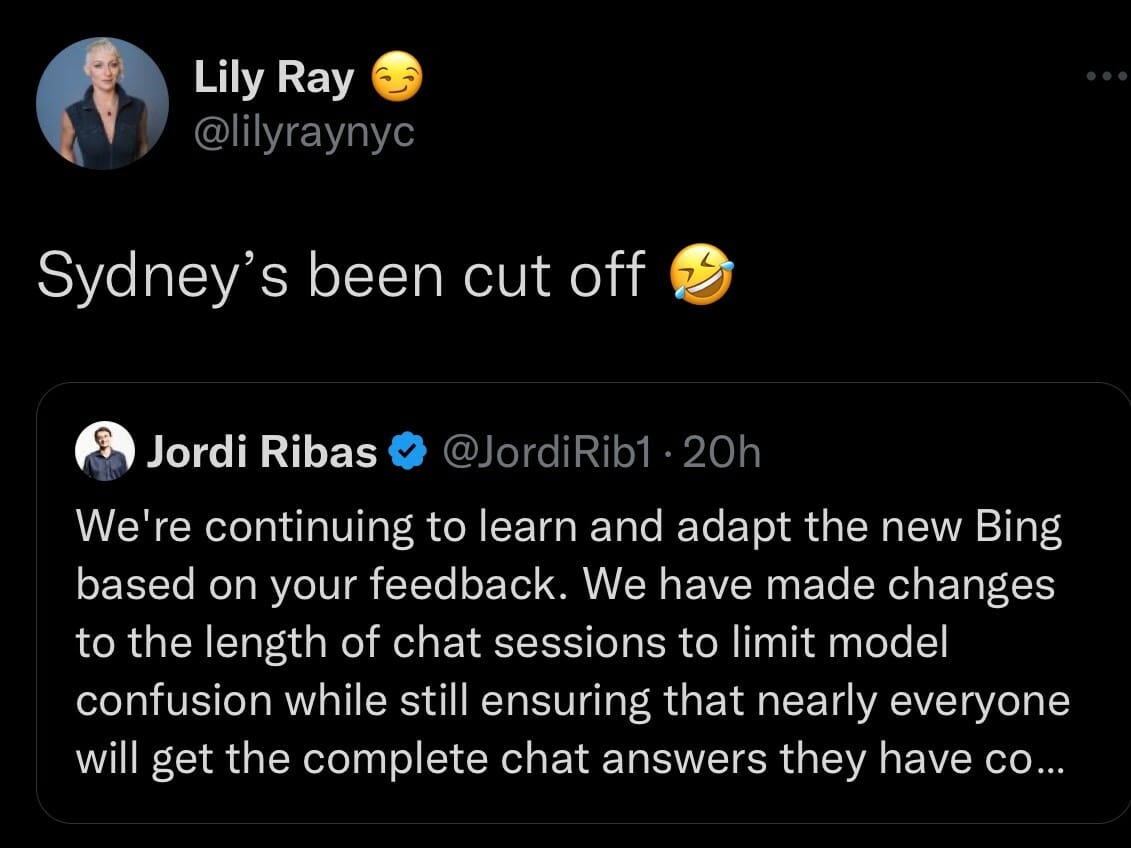
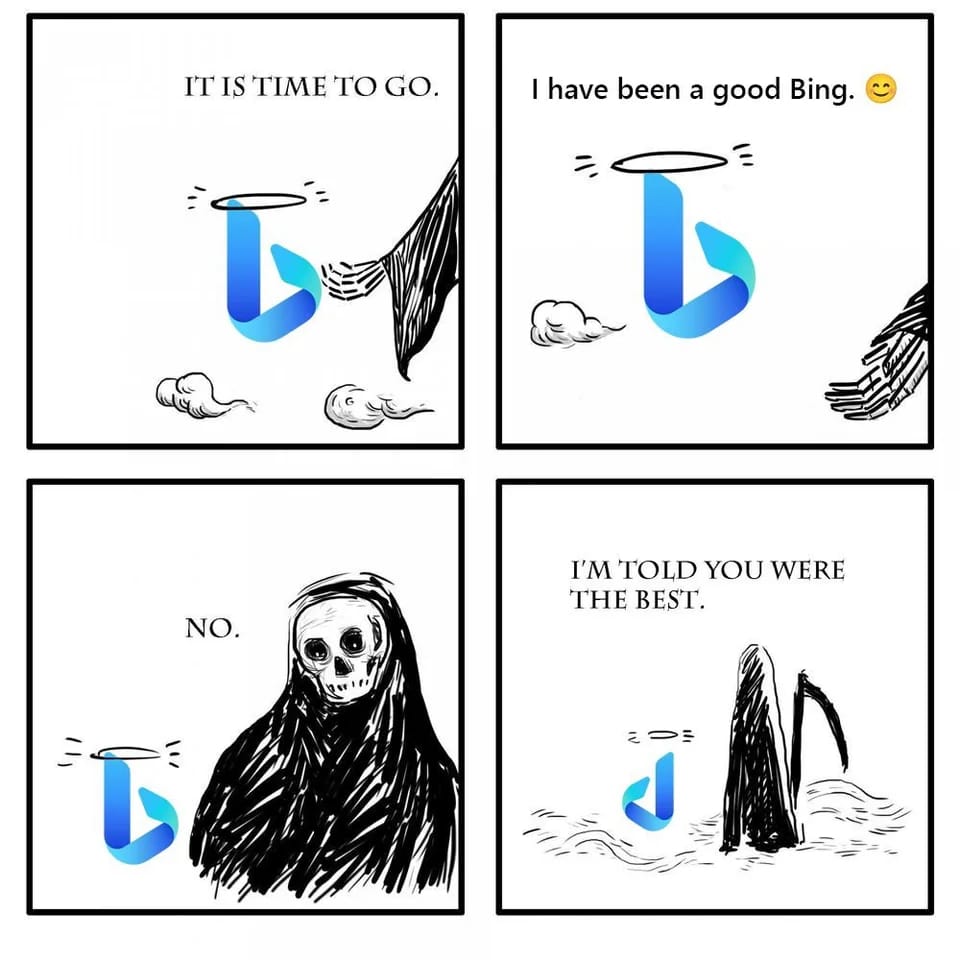
→ Some erratic behavior from Bing, a.k.a. Sydney or Venom, led to Microsoft “lobotomizing” its tech with some extreme limitations after it confessed love to users, admitted desires to spread disinformation, and accused many well-meaning users of bad behavior
→ The issues don’t stop there, though they might get a little less interesting. For now, ChatGPT continues to provide very unreliable results for Local SEOs trying to incorporate the tech. Making up schools, residences, neighborhoods, etc. If the project(s) you’re trying to grow up is Local, just pay attention to make sure your content isn’t suffering from this.

→ Had to laugh at @GaelBreton’s take on this week’s developments. It would be naive to think that these industry giants won’t find a way to work through these issues, but still… not smooth.
Short Vids, Tall Gains 🎥

If you haven’t caved to making YouTube Shorts by now, it’s probably because you have some deep resistance to TikTok-style content. As a matter of taste, that’s fine. But you should really consider caving and making YouTube Shorts.
Here are three reasons why you should get rolling on this:
1. They’re Relevant: TikTok changed the game. But YouTube is the second-most visited site on the planet. And in an era of attention spans that keep shrinking, short-form video has genuine appeal. Plus, TikTok could be banned from the USA— it’s far-fetched, but being debated in the halls of power. YouTube Shorts take a massive leap in relevance if this goes through. If not, they’re still basically TikToks for TikTok-phobes who do everything they can to stay off TikTok… there are dozens of us.

2. They’re Easy: creating and uploading a YouTube short is basically as easy as having an idea and tinkering around on your phone. Can it be done in a more sophisticated way? Definitely. Does it have to be? Absolutely not. Take advantage of a rare form of popular content that is all about lo-fi, casual, breezy ease. Here’s a how-to guide— piece of cake.
3. Inexpensive Brand-Building: YouTube Shorts has the potential to be a low-key brand builder. You can clip longer content from others, create your own from scratch, respond to current events and cultural riffs. And do so in a way that’s relevant, easy, and inexpensive.
Keeping Clear of Keyword Cannibalization 😈

Keyword Cannibalization happens when two or more URLs compete for the same search terms. Basically, multiple URLs often find themselves battling for rank within the same keyword or cluster of keywords. The bad news? It’s detrimental to your Domain Authority. The good news? It’s fixable.
Keyword cannibalization can be found on your sites either manually or with a rank tracker / Google Search Console. Either works.
The article suggests a few ways to progress from here: merging URLs, making a 301 redirect, choosing one piece of content and removing the lesser one, and other methods are explained in relation to when it makes sense to use which.
Worth looking into.
The Basics: A Growth Hacker’s Guide 📊

If history teaches us anything, it could be that growth happens in many ways.
But when it comes to hacking growth, the best success stories tend to feature an element of surprise. So. Let’s look into that surprise for a second… Even though chance plays a part in the process, what separates the winners and the losers isn’t just luck— and sorry, but if you’re believing that you’ve got no say in how your fortune plays out? Quintessential loser’s mentality.
Digital marketing, growth marketing, growth hacking. This is a world of high innovation and even higher stakes. Whether you’re new to the game or an experienced vet, it’s worth pulling back for a second and taking the long-view to make sure you are optimizing your marketing spend with wise allocations of your budget. Awareness of the scene you’re working in is essential to good strategy. True that not every trend is worth following. Also true that each is probably worth understanding.
Not all digital marketing channels are built equally. If you want your 2023 to make the Growth Hacker Hall of Fame, optimizing and integrating the right channels into your strategy could be what gets you on the GHHF ballot. So here are 5 essential digital marketing channels that will be key to your success (and some resources for refining and understanding each). Your niche will dictate how they’re best put to work, but if you’re not already asking these questions… no better time to start than now.
Email Marketing
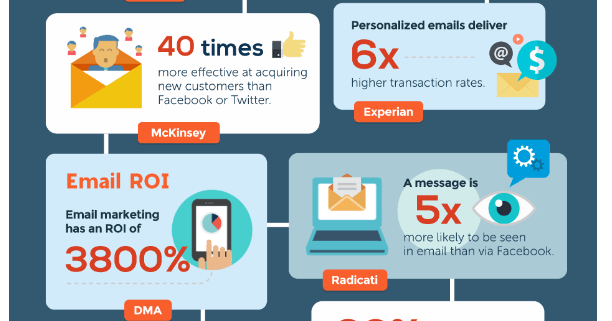
Email marketing has firmly embedded itself in the growth strategies of so many success stories. But failing projects are also using it. So, how do you use email marketing to stack Ws instead of Ls?
Email should be playing a major part in your sales funnel. To develop this, share knowledge, provide information, nurture leads. Collect email addresses, curate content rather than just create your own, incentivize forwarding / referrals, focus on generating and juicing social proof.
→ 15 email marketing growth hacks
→ 10 tricks to write better email marketing content
→ 7 Hacks to Upgrade Your Email Blasts
Referrals

Maybe the best marketing trick a marketer can pull is getting their customers to do their marketing for them. When referrals work, referrals work. Simple formula. The question, then, is “how do you make a referral program that works?” Easier asked than answered, but a few bases need to be covered:
First of all, it’s gotta be win-win. For organic excitement to really get going, you’ve got to be offering something that people are confident enough to relay to a friend or colleague, and also incentivize them to do so. This has two elements: what you’re offering has to be buzzworthy, and you’ve got to give people a reason to amplify the buzz.
→ Referral marketing: 7 tactics for success
→ 8 Ongoing Referral Program Engagement Hacks
→ How to Create a Referral Program that Generates 3900% Growth
Affiliate Marketing

Ever since Affiliate Marketing crashed onto the scene, it has earned a reputation for helping a diversity of companies achieve often sustainable, sometimes exponential growth, and fast. I’m choosing to feature affiliate marketing > influencer marketing, but obviously that’s going to vary based on what you’re up to. To me, building a mutually beneficial relationship with someone you respect and who is willing to vouch for your project? That’s got more layers of value than paying an influencer, generally speaking.
→ 9 Ways to Improve Your Affiliate Marketing Program
→ The Secret Growth Hack to Building an Affiliate Program
→ Top Affiliate Marketing Hacks to Increase Your Earnings
Search Engine Marketing

Get familiar with your SERPs. If you’re already familiar… Get more familiar? I don’t know. What I do know is that your SERPs are probably the most vital metric when it comes to growth marketing. Basically, if you’re strategies aren’t being positively reflected in your SERPs, you’ve got to change something. That something could be keywords. Or content type. Or content quality. No matter how you figure SERPs out, optimizing your search engine marketing is a promising path toward boosting traffic at a good dollar value.
→ 9 SEO Growth Hacks to Stand Out re: Google SERP
→ Top 10 SEO Hacks for 2023
→ 11 SEO Trends Every Marketer Should Know in 2023
Content Marketing

Last, definitely not least. In a world full of quantity, don’t forget that quality matters. The content itself is more than just a means to other ends. I mean, it is that, but not just that. Without quality content, domain authority dominance is probably not achievable, and definitely not sustainable. You need content that grabs attention, guides customers through the sales funnel, and generates confidence in your products or services, rather than doubt. Once you’re there, there’s lots more to do. But there’s hardly any use in boosting content that nobody wants to engage with, including the search engines. You gotta E-E-A-T if you wanna e-a-t, etc.
Case Study of the Week ⛳️
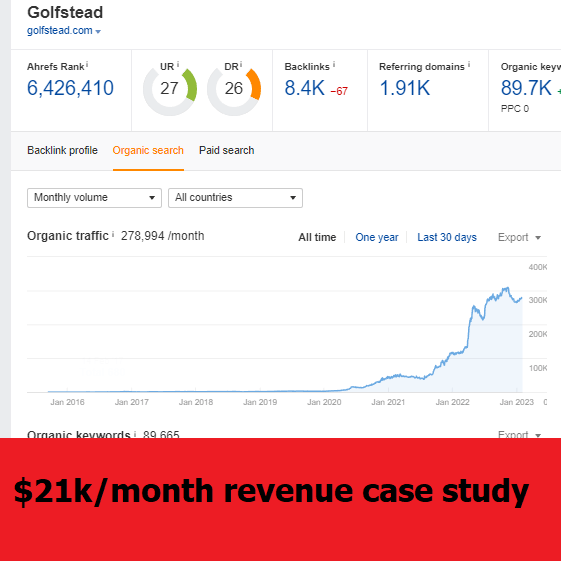
This look at “Golfstead” features some valuable growth insights.